RddBull.com will fully be up and running soon
Energy Management — Build a System That Keeps You Energized All Day
Your ability to perform, think clearly, and stay consistent depends on one thing: your energy system. Not motivation. Not discipline. Energy.
Energy management is the science and strategy of regulating how your body and brain create, conserve, and use energy throughout the day.
When your energy system is efficient → your productivity flows.
When it’s broken → everything feels harder than it should.
This guide gives you a complete, science-backed framework to build sustainable, high-performance energy — without burnout, extreme diets, or complicated routines.
1. Why Energy Management Beats Time Management
Most people try to manage their time, but time is fixed.
Energy is variable, trainable, expandable, protectable.
A person with high energy and low time will outperform someone with low energy and lots of time every single day.
Modern neuroscience shows that energy is driven by four systems:
- Physical energy (glucose, oxygen, hydration, hormones)
- Cognitive energy (mental load, attention bandwidth)
- Emotional energy (mood regulation, stress response)
- Environmental energy (light, noise, workspace friction)
If any of these drop → your performance drops.
Your goal is not to “push harder.”
Your goal is to remove the biggest leaks and build a system that maintains energy automatically.
For a deeper breakdown of how your first hour shapes your energy curve, explore our morning optimization system.
2. The Daily Energy Curve (And How to Ride It Instead of Fighting It)
Your body runs predictable energy cycles across the day, driven by:
- cortisol (alertness)
- glucose stability
- circadian rhythm
- ultradian rhythms (90–120 min focus cycles)
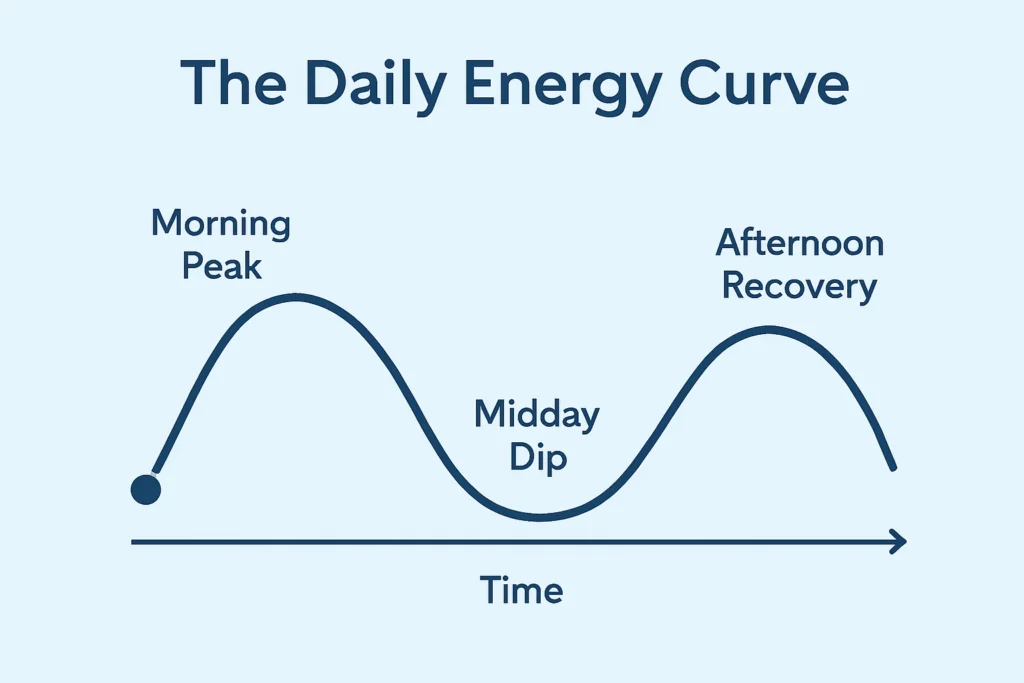
The typical curve:
- Morning: rising cortisol → high potential focus
- Midday: natural dip → slower processing
- Afternoon: second performance peak
- Evening: energy drop for recovery
High performers don’t push through dips.
They align tasks to energy windows:
Morning Peak (9–11 AM): Deep Work
Planning, strategy, writing, analysis, creative problem solving.
Midday Dip (12–2 PM): Low-Energy Tasks
Admin, emails, simple execution, lunch + short walks.
Afternoon Peak (2–5 PM): Execution Block
Meetings, structured tasks, completing major work blocks.
Evening (6–9 PM): Recovery Mode
Light activities, reflection, connection, low stimulation.
3. The 4 Pillars of Sustainable Energy
Pillar A — Physical Energy
Physical energy is not about intense workouts. It’s about consistent internal systems.
a) Hydration: the fastest energy win
Even 1% dehydration reduces cognitive performance, memory, and mood.
Rule:
Drink 250–350 ml water within 10 minutes of waking, and sip consistently during the day.
b) Low-Sugar, High-Stability Meals
The brain demands steady glucose.
Best morning fuel:
- eggs
- yogurt
- nuts
- oats
- protein shake
- avocado
- slow carbs
Worst morning fuel:
- pastries
- sweet cereal
- fruit juice
- white bread
- high-sugar snacks
Blood sugar spikes → crashes → inconsistent energy.
c) Light Exposure = Natural Energy Switch
Morning sunlight increases cortisol in a healthy way, boosting alertness for hours.
5 minutes outdoors beats 30 minutes indoors.
d) Micro-Mobility (Movement Snacks)
Instead of one long workout, consider:
- 2 min mobility
- 1 min breathing
- 10 min walk
- stretching every 60–90 minutes
Small movements protect posture, circulation, and mental clarity.
Pillar B — Cognitive Energy
Your brain has a limited daily cognitive budget.
a) Reduce cognitive load
Remove unnecessary decisions:
- fixed breakfast
- fixed morning routine
- fixed clothing style
- fixed work blocks
The less you choose → the more energy you save for meaningful tasks.
b) Create focus blocks
Work 60–90 minutes → pause 5–10 minutes.
This aligns with your brain’s natural ultradian rhythm.
c) Eliminate early-morning input
Checking notifications before the brain stabilizes crushes cognitive energy for the next 4–6 hours.
Pillar C — Emotional Energy
Emotions drain or recharge energy faster than anything.
a) Emotional residue
Unfinished conflicts, stress, and small irritations create ongoing mental friction.
Use the 2-Minute Reset:
Deep breath → Name the emotion → Identify the trigger → Release.
b) Energy boundaries
People who drain your energy → limit.
People who raise your energy → prioritize.
c) Mini-celebrations
Small wins produce dopamine, reinforcing motivation.
Pillar D — Environmental Energy
Your environment either supports or sabotages performance.
a) Light
Cool light (blue/white) boosts daytime alertness.
Warm light (yellow/orange) calms evening signals.
b) Workspace friction
Reduce friction points:
- messy desk
- multiple tabs
- notifications
- loud environments
c) Temperature
Slightly cooler rooms enhance alertness.

Cognitive energy is one of the core pillars — learn how to reduce cognitive load and sharpen mental performance here.
4. Build Your Daily Energy System (Simple Framework)
Your energy system doesn’t need to be perfect — it needs to be consistent.
Here’s a 3-step framework:
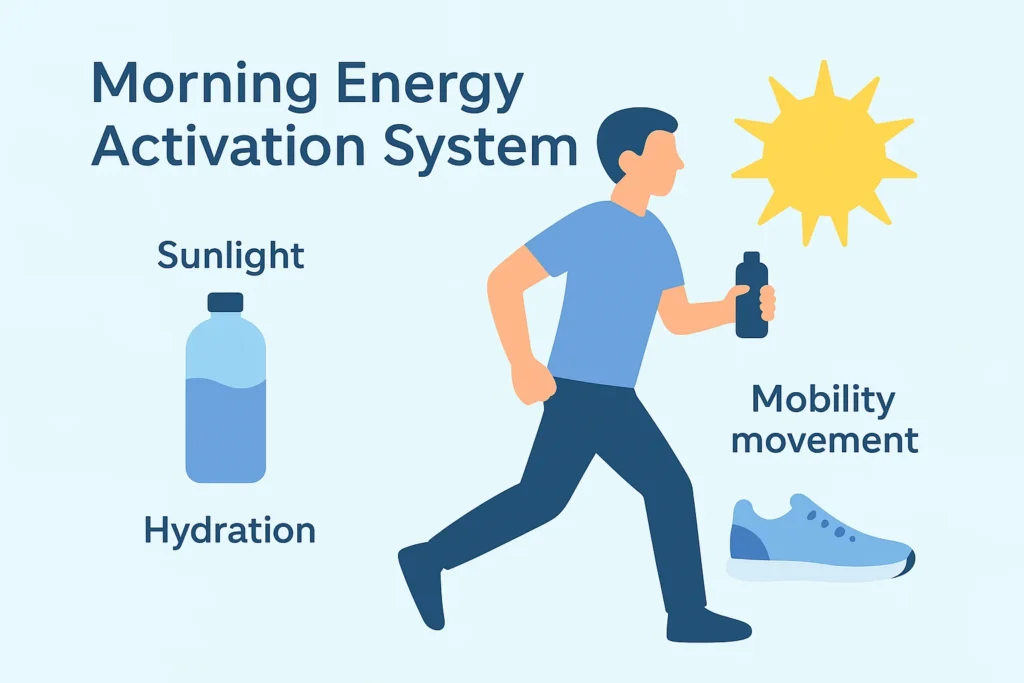
Step 1 — Morning Activation (10–15 minutes)
✔ hydration
✔ light exposure
✔ mobility movement
✔ no input
✔ one high-impact goal
This kick-starts both physical and cognitive energy.
Step 2 — Midday Restore (3–5 minutes)
✔ walk 2–5 minutes
✔ stretch
✔ slow breathing
✔ low-sugar lunch
Prevents the midday crash.
Step 3 — Afternoon Alignment (10 minutes)
✔ re-check top 3 priorities
✔ adjust tasks
✔ prepare for second focus window
Maintains momentum after the dip.
Step 4 — Evening Downshift (15–20 minutes)
✔ light dinner
✔ screen dimming
✔ short reflection
✔ tomorrow’s priority list
Recovery ensures tomorrow’s energy starts high.
5. The Goal: Stable Energy, Not Maximum Energy
You don’t need endless energy.
You need reliable energy.
A well-managed energy system helps you:
- think clearer
- work faster
- reduce stress
- avoid burnout
- improve decision-making
- feel consistent instead of unpredictable
Your performance improves not because you do more — but because you leak less.
